What a Neighborhood of Fewer Than 1,000 People Is Doing With a Full Events Calendar
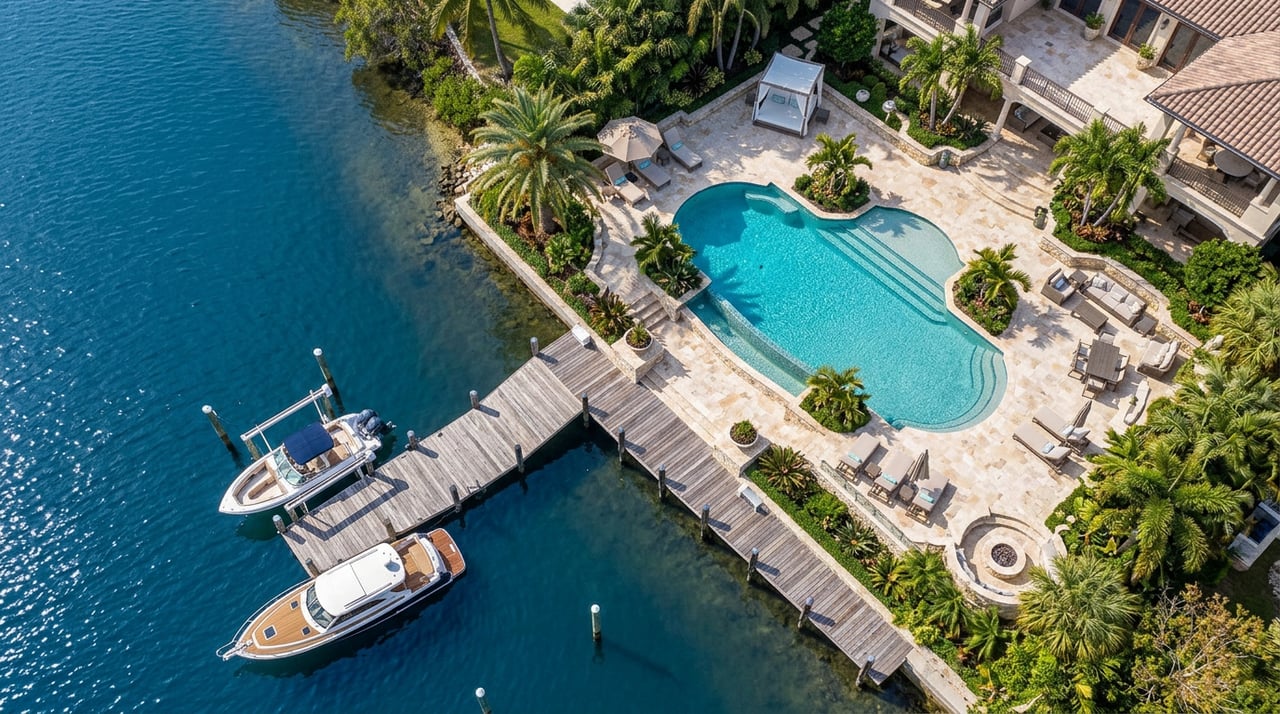
Walk the promenade at Westshore Marina District on the fourth Sunday of any month and you will hit a wall of tents before you hit the water. More than 70 vendors set up under string lights and open sky, a band tunes up around 11 a.m., dogs outnumber the food trucks, and strollers move at the pace of the slowest table of samples. It looks, for a few hours, like a town.
It is not a town. By Census figures cited on the neighborhood platform Nextdoor, the district holds roughly 944 residents. That is a number small enough to fit in a single Marina Pointe tower with room left over, spread across 52 acres of waterfront that also includes a working marina, a retail village, and 1.5 miles of trail. And yet that population sustains a market that runs every month of the year, a rotating cast of food trucks most weekends, and a restaurant lineup that would not feel out of place in a neighborhood five times the size.
That gap between headcount and program count is the thing worth understanding if you already live here. The calendar was not built to entertain the people who own units. It was built to pull in everyone within walking and driving distance of Westshore and Gandy, and the district's own residents happen to get the best seat.
Run the numbers the obvious way and the district's social calendar looks like overkill. Fewer than a thousand residents, most of them owners at Marina Pointe or renters in the surrounding apartment and townhome product, would not on their own fill a monthly market with 70-plus vendors. Tampa Bay Markets, the outside operator running that Sunday event, books it as a public draw open to anyone in South Tampa, not a private amenity gated to district addresses. The parking instructions on the event listing point people to the surface lot behind Duckweed Market and to Town Apartments Westshore, which only makes sense if the intended crowd is bigger than the buildings around it.
The market and its companion events reach beyond the district, rather than serving only as private perks. That framing matches what actually happens on the ground. Jazz strolls, yoga sessions on the marina docks, and dog-friendly happy hours have all run as recurring programming here, according to the district's own event recaps, aimed at anyone willing to show up rather than anyone holding a deed.
944 residents. A calendar built for a neighborhood ten times that size.
If you live here, this explains a texture of daily life you may not have named yet: why the same faces show up at Cru Cellars on a Wednesday, why the market never feels thin even in the slow months, and why a district with a population under 1,000 still manages to feel occupied on a Tuesday night.
The most visible sign of the district's next phase is Luna, the second residential tower planned for Marina Pointe. If you have scrolled past renderings of its glass facade or heard about the dockside launch party in November 2025, complete with yacht arrivals and live jazz, you would be forgiven for assuming a crane is imminent.
It is not, at least not yet. As of late August 2026, project trackers still list Luna's status as announced rather than under construction, with groundbreaking anticipated sometime this year and delivery not expected until around December 2028. Pre-construction sales for the tower's 151 units opened on November 8, 2025, with pricing starting near $1 million and running past $4 million for larger residences, but sales activity and site work are two different clocks, and only one of them has started ticking.
For residents, that timing gap matters more than the marketing. It means the noise, staging, and access changes that come with a construction project of this scale are still ahead, not behind. Tower One, by contrast, is a finished story: 118 condos and seven Harbour Homes completed and fully sold, with owners settled in since 2023. Luna is the next chapter, but the ground hasn't moved yet.
The dining rotation inside Marina Landings has settled into a lineup that reads less like a developer's curated tenant list and more like a set of neighborhood habits. Cru Cellars Westshore anchors the wine crowd with a deep bottle list and regular Wine Wednesday tastings. Chuck Lager America's Tavern, led by chef Fabio Viviani, handles the casual end with a burger that has become something of a house signature. Rio Izakaya brings a Japanese-Latin fusion menu that stands out from the coastal-seafood default. Vela leans Mediterranean and Italian, with a patio positioned to catch the evening light off the Marina Pointe towers. Hula Bay and Salt Shack cover the waterfront-seafood register, and Mickey's Subs, a deli that predates most of the district's newer construction by decades, still handles the quick-lunch crowd with sandwiches that have not changed much because they did not need to.
Layer weekend food trucks on top of that fixed rotation and the effect compounds. The trucks change, the anchors do not, and the combination is what keeps a retail node from feeling static even for people who eat there weekly.
None of this connects without the physical layout underneath it. The district's 1.5 miles of waterfront trail run past the marina, through Marina Landings, and out toward the broader Friendship Trail network, giving residents a continuous walking and biking path that doubles as the market's footprint on event Sundays and as the everyday route for anyone heading to dinner without a car. It is also, functionally, the reason a food truck gathering or a yoga session on the docks can happen at all. Public space that connects retail to residential to marina in one unbroken line is what makes a pop-up event feel like part of the neighborhood instead of an add-on to it.
The district right now is running two clocks simultaneously. One is the weekly and monthly rhythm of markets, food trucks, and a dining scene that has found its footing. The other is the slower, still-unbroken-ground timeline of Luna and whatever comes after it. Both are real, and confusing one for the other is an easy mistake to make when a launch party and a groundbreaking can look similar from a distance.
For anyone who already calls this stretch of Old Tampa Bay home, the more useful read is the first one: a small population sustaining a program built for a much larger one, with events that draw people from South Tampa at large. The construction will come. The market already runs every fourth Sunday, rain or shine, whether Luna breaks ground next month or next spring.
If you are watching this corridor for reasons beyond a Sunday market, whether that is a future move within the district or a sale of a property nearby, the team at Aquamarine Real Estate tracks these Tampa Bay waterfront pockets closely enough to know the difference between a marketing timeline and a construction one. Schedule your complimentary consultation when you are ready to talk specifics.
Stay up to date on the latest real estate trends.
You’ve got questions and we can’t wait to answer them.
Hannon Team
(239) 682-6262
[email protected]
1495 Pine Ridge Rd
Naples, FL 34109
14502 North Dale Mabry Highway
Tampa, FL 33618