Pasco Master Planned Communities Explained
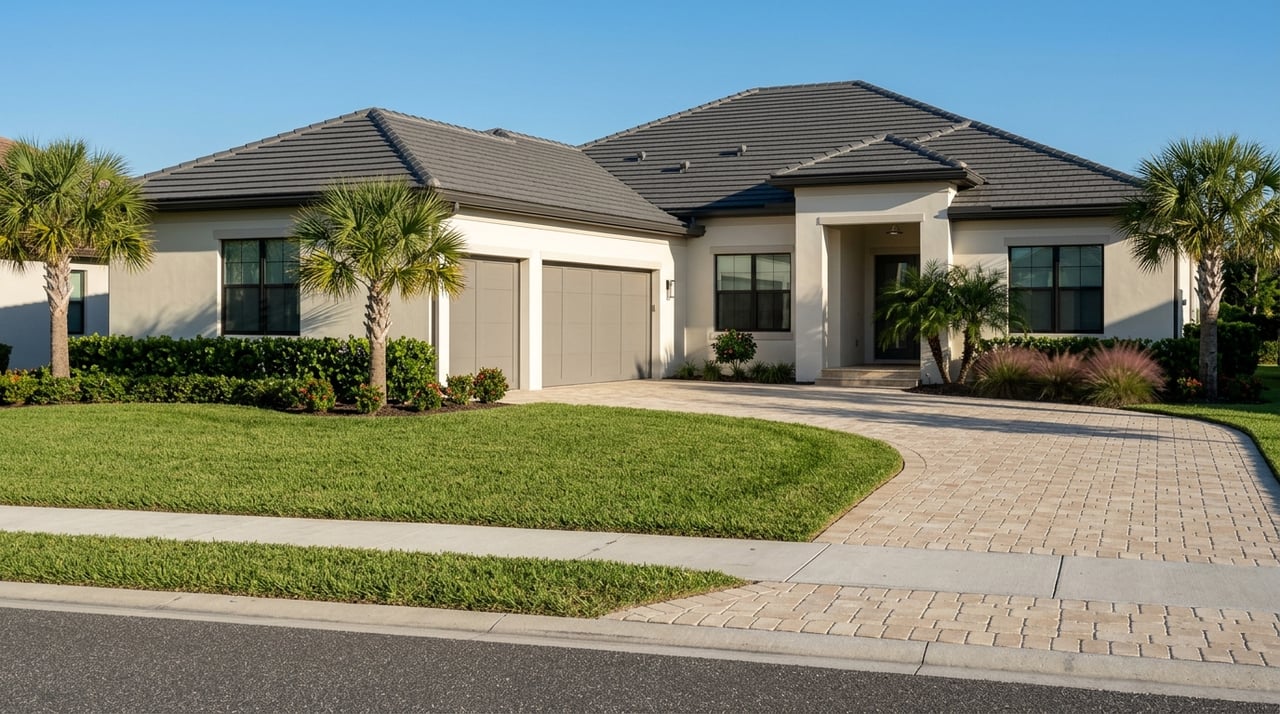
If you have been looking at newer neighborhoods in Pasco County, you have probably seen the phrase master-planned community everywhere. It sounds appealing, but it can also feel vague when you are trying to compare real options, monthly costs, and day-to-day lifestyle. The good news is that Pasco County gives this idea more structure than a simple marketing label, and once you understand that framework, it becomes much easier to evaluate what fits your goals. Let’s dive in.
In Pasco County, larger coordinated projects are often organized under planning categories such as Planned Development, Master Planned Unit Development, and Town Center. County planning language describes these tools as a way to mix land uses and intensities, preserve conservation areas beyond minimum code requirements, encourage flexible site design, and provide sites for recreation and other public facilities.
In practical terms, that usually means you are looking at more than a standard subdivision. A Pasco master-planned community often includes a coordinated plan for homes, open space, amenities, and sometimes retail, civic, or community-serving uses.
That distinction matters when you are choosing where to live. Instead of judging a neighborhood by a brochure or entry monument, you can start by asking how the community is planned, what features are built into that plan, and how those features may affect your daily routine.
Many buyers are drawn to master-planned communities because they feel more organized from the start. Shared amenities, planned open space, and a more intentional mix of uses can create a sense of structure that is not always present in a traditional neighborhood.
For some buyers, that predictability is a real advantage. If you are relocating, buying a second home, or simply trying to narrow your choices, it helps to know a community may be designed around recreation, common areas, and a connected layout rather than only home lots.
This does not mean every large neighborhood offers the same lifestyle. In Pasco, the appeal often comes from the underlying planning approach, not just the size of the development.
One of the biggest questions buyers ask is what a master-planned community includes beyond the homes themselves. In Pasco County, Town Center rules require a mix of nonresidential, retail, residential, civic, and community common area uses.
Those same rules also require usable community common areas and open space that are accessible to the public. At least 15 percent must be set aside for community common areas and open space, and at least 5 percent must be in greens, squares, and plazas.
Pasco also requires a community park of at least one contiguous acre in Town Center developments. That park must include, at minimum, a shelter and walking paths or trails.
From a buyer’s point of view, those details help explain why some communities feel more complete or lifestyle-oriented. You may see parks, trail connections, open gathering spaces, or a mix of uses that supports errands and recreation in one overall setting.
Pasco’s planning guidance also emphasizes the value of conserving natural features. That includes features such as streams, lakes, floodplains, groundwater areas, wooded areas, and steep slopes.
The county’s greenways, trails, and blueways planning adds another layer to that vision. Pasco defines greenways as linear recreational facilities, trails as corridors for recreation or alternative transportation, and blueways as paddling routes with access points like docks, ramps, and launches.
If outdoor access is important to you, this is a useful part of the conversation. A community may offer more than a clubhouse or pool, especially if its design connects residents to trails, open space, or water-based recreation.
It is easy to assume that any big new neighborhood is a master-planned community, but that is not always the case. In Pasco, the formal framework comes from planning tools such as PD, MPUD, and TC.
That means size alone does not tell you much. A neighborhood can have many homes and still function very differently from a community built around integrated land uses, public open space, recreation areas, and phased infrastructure planning.
If you are comparing neighborhoods, this is one of the smartest questions you can ask early. You want to know whether the community is simply large or whether it was actually designed as a coordinated place with a broader plan.
Another term that often comes up in Pasco master-planned communities is CDD, or Community Development District. In Florida, Chapter 190 describes a CDD as a uniform way to manage and finance basic community development services, public improvements, and community facilities.
The law also allows a district to levy special assessments and fees for items such as recreation, water management, and water and sewer systems. Florida law requires disclosure to buyers at the initial sale of property inside a district.
This is where many buyers need clarity. A CDD is not the same as zoning or permitting. Florida law makes clear that planning and permitting laws still control development, so a CDD is better understood as a financing and governance tool rather than a description of the neighborhood style.
When buyers hear about CDDs, they sometimes assume the term tells them everything about the community. It does not. What it can tell you is that certain improvements or facilities may be funded and managed through a formal district structure.
That makes it important to review the costs and disclosures carefully. If you are trying to compare two communities, the CDD structure may affect your monthly or annual ownership costs in a way that deserves real attention.
Master-planned communities can offer a lot, but they also come with tradeoffs. The biggest one is often cost and governance.
Pasco notes that common open space may be owned and maintained by property owners associations, homeowners associations, or similar entities. That means you should expect to review HOA rules, maintenance responsibilities, amenity schedules, and any applicable CDD assessments before you commit.
A second tradeoff is timing. Pasco requires phased development to match facility capacity, which helps support infrastructure planning, but it can also mean parts of the community arrive in stages.
If you are one of the earlier buyers, some amenities or commercial components may still be planned rather than complete. That does not make the purchase a bad idea, but it does mean you should ask which phases are done, which are underway, and which features are still future-facing.
When you visit a master-planned community, the most helpful questions are usually the most practical ones. Focus less on branding and more on how the neighborhood works today.
Here are a few smart questions to bring with you:
That last question matters more than many buyers realize. Pasco’s parcel and GIS resources include FEMA and evacuation-zone fields, so hazard verification should be part of your normal due diligence when evaluating a property.
The best way to compare Pasco’s master-planned communities is to separate design, cost, and timing. Those three factors often tell you more than the marketing materials.
Here is a simple way to think about it:
| Factor | What to Review | Why It Matters |
|---|---|---|
| Design | Open space, trails, parks, mix of uses, natural features | Helps you understand the day-to-day lifestyle |
| Cost | HOA rules, maintenance obligations, CDD assessments and fees | Clarifies true ownership costs |
| Timing | Completed phases versus future phases | Shows whether you are buying into today’s version or tomorrow’s vision |
If you keep those categories in mind, you will ask better questions and make clearer comparisons. That is especially helpful if you are relocating or considering a second home and need a community that aligns with the way you actually want to live.
A master-planned community can be a strong match if you value amenities, organized open space, and a more intentional neighborhood layout. It may also appeal to you if you want a community where recreation and common areas are part of the broader plan rather than an afterthought.
At the same time, it is worth slowing down and confirming the details. The right fit depends on what is complete today, what ownership costs look like, and how the neighborhood’s long-term plan lines up with your priorities.
If you are exploring Pasco County and want help sorting through the differences between new construction options, amenity-rich communities, and more traditional neighborhoods, Jesse & Jeri Hannon bring a patient, consultative approach that makes the process feel much clearer.
Stay up to date on the latest real estate trends.
You’ve got questions and we can’t wait to answer them.
Hannon Team
(239) 682-6262
[email protected]
1495 Pine Ridge Rd
Naples, FL 34109
14502 North Dale Mabry Highway
Tampa, FL 33618