Why Davis Islands Home Prices in 2026 Reflect Two Markets
Tampa's Fire Station 17 spent months running its crews out of eight modular trailers after Hurricane Helene flooded the building in September 2024. The station took on three feet of storm surge, enough to ruin the drywall, the HVAC system, and the electrical panels inside a firehouse that had stood since 1958. As of the most recent public reporting in fall 2025, the city was still asking state and federal disaster funds for roughly $23 million to demolish the building and rebuild it raised off the ground, a process officials described as stalled by fierce competition for recovery dollars.
That story is about a public building, but it describes the exact math now playing out on private homes across the island. And that math is the reason three different market reports can look at Davis Islands in the same month and disagree on the median home price by hundreds of thousands of dollars.
As of July 2026, one portal-based tracker put the Davis Islands median home price at $1,849,000, with an average sale price above $2.09 million and homes spending an average of 132 days on the market. A separate July 2026 snapshot pulling from active listings put the median list price at $2.14 million, with price per square foot down roughly 7 to 8 percent compared to a year earlier. A third source, working from the trailing twelve months of closed sales through July 2026, showed 93 homes changing hands at an average asking price near $2.29 million against an average selling price near $2.12 million, a list-to-sell ratio of 92 percent, and an average of 141 days to close.
None of those numbers are wrong. They're measuring different slices of the same small island, and the slices don't overlap the way they used to.
Hurricane Helene pushed five to eight feet of storm surge onto Davis Islands on the night of September 26, 2024. Many homes took on enough water that the cost to repair them crossed a specific federal line: FEMA's 50 percent substantial-improvement threshold. Once repair or renovation costs on a home in a flood zone exceed half the structure's value, the rule requires the entire home to be brought up to current elevation code, not patched back to how it was.
That single trigger split Davis Islands into two housing products being counted as one market.
On one side are homes that stayed under the threshold: cosmetic damage, insurance claims that covered drywall and flooring, owners who chose not to touch the foundation. These are the interior lots and older Mediterranean Revival homes still sitting close to grade, typically on the 7,500 to 10,000 square foot interior parcels that make up much of the island's original street grid.
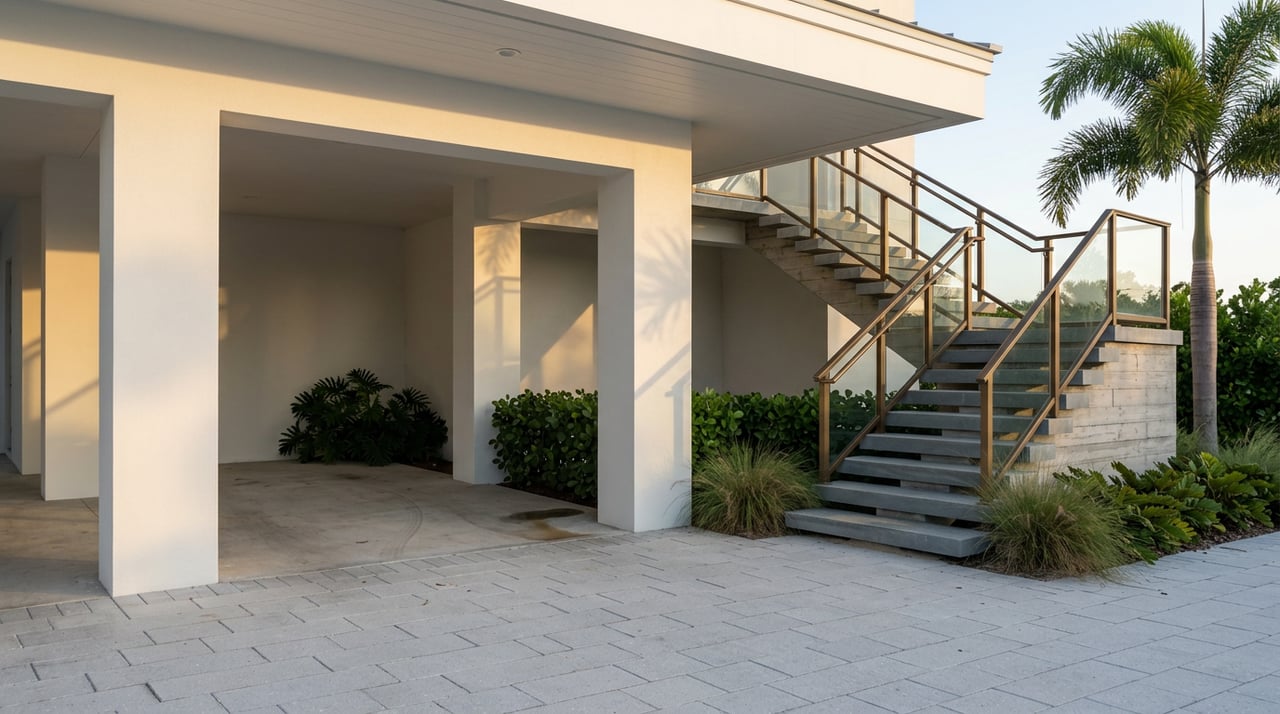
On the other side is a wave of teardown and new-construction activity, now visible on nearly every canal street. Listings from builders including BayWalk Homes, Mobley Homes Custom, Momentum Homes, Brookshire Homes, and TB Homes are moving through the island with completion dates clustered in late 2026, several of them replacing older homes on lots along Adalia, Bosphorous, Chesapeake, and Aegean, the canal streets where lot sizes run larger and water access is direct. These homes are engineered to current AE and VE flood elevations from the first drawing, with finished living space raised well above base flood elevation and ground floors used only for parking or storage.
A buyer comparing a $950,000 interior cottage to a $2.8 million new build three streets away isn't comparing two houses on a spectrum. They're comparing a pre-Helene product to a post-Helene product, and the median price of the neighborhood is an average of two markets that are diverging, not converging.
The neighborhood didn't get more expensive across the board. It got harder to buy into cheaply on the old side of the elevation line and more expensive to build on the new side of it.
If Davis Islands were purely a scarcity story, the tight supply of land on an 800-plus acre island connected to downtown Tampa by a single bridge should be producing fast sales and rising per-square-foot values. Instead, days on market across recent reporting runs from 113 to 141 days, and price per square foot has softened year over year rather than climbed.
That's what a market looks like when buyers are quietly pricing in the elevation question themselves. A home that looks like a deal on a per-square-foot basis may carry a renovation ceiling the listing doesn't mention, and buyers who've done their homework are taking the extra weeks to find out which side of the substantial-improvement line a property sits on before they write an offer.
Does being in a flood zone mean a Davis Islands home is a bad investment? Not automatically. Flood zone designation affects insurance cost and renovation flexibility, but it doesn't erase the demand for waterfront lifestyle, walkability, and proximity to downtown Tampa that keeps buyers choosing the island.
Is now a bad time to buy because of the storm history? The storm history is exactly why doing the diligence matters more than the headline price. Homes that were properly elevated or newly built to current code carry a different risk and cost profile than homes still sitting at the old grade, even at similar list prices.
How long does new construction actually take on the island? Custom builds on Davis Islands commonly run three to four years from initial design through move-in once permitting, flood compliance, and Aviation Authority approvals are factored in. Major renovations that trigger elevation work can take 18 to 36 months.
Davis Islands isn't confusing because the data is bad. It's confusing because the island is quietly running two markets at once, and the published median splits the difference between them. If you're comparing Davis Islands to other South Tampa waterfront pockets, or trying to figure out which side of that elevation line a specific listing sits on, that's exactly the kind of question worth walking through with someone who tracks this market closely.
Aquamarine Real Estate works with buyers across Tampa's waterfront neighborhoods every month, from Davis Islands to the broader Tampa Bay area. If you're weighing a purchase here, schedule your complimentary consultation and we'll walk through the permit history, flood zone standing, and true carrying costs before you write an offer.
Stay up to date on the latest real estate trends.
You’ve got questions and we can’t wait to answer them.
Hannon Team
(239) 682-6262
[email protected]
1495 Pine Ridge Rd
Naples, FL 34109
14502 North Dale Mabry Highway
Tampa, FL 33618